Immersive Return
An apartment elsewhere
The resident enters a body in the apartment itself: a remote return to a home that has kept going without them.
Tenants is set in your home. Not a model of it, not a recreation. Your living room, your hallway, the chair by the window. You are the main character. The other characters arrive as robot bodies; they sit in your chairs and walk your halls.
The piece is a domestic fiction set a few years from now, somewhere between a film, a game, and an improvised play. In that future, robots are ordinary household equipment. People who are away, or unable to be present, send one to do what needs a body: the cleaning, the dog, the heavy box. Headsets, not much different from present-day VR, are how a person spends an afternoon elsewhere... a remote shift, a concert, a game with friends in another city.
A headset can also put a person inside a robot. Someone in Montana or Malibu, or on the Moon, can come home through a robotic body. They walk through its rooms, move the furniture, paint a wall, spend an evening with friends back home.
In the story, your home is an apartment whose residents are elsewhere. One by one, they return through robotic bodies. Their separate lives, led in separate places, overlap inside your real rooms.
Immersive Return
The resident enters a body in the apartment itself: a remote return to a home that has kept going without them.
Third Space
The room at hand becomes the setting. Its furniture and open areas remain in place, while a shared social world takes form around them.
Immersive Return
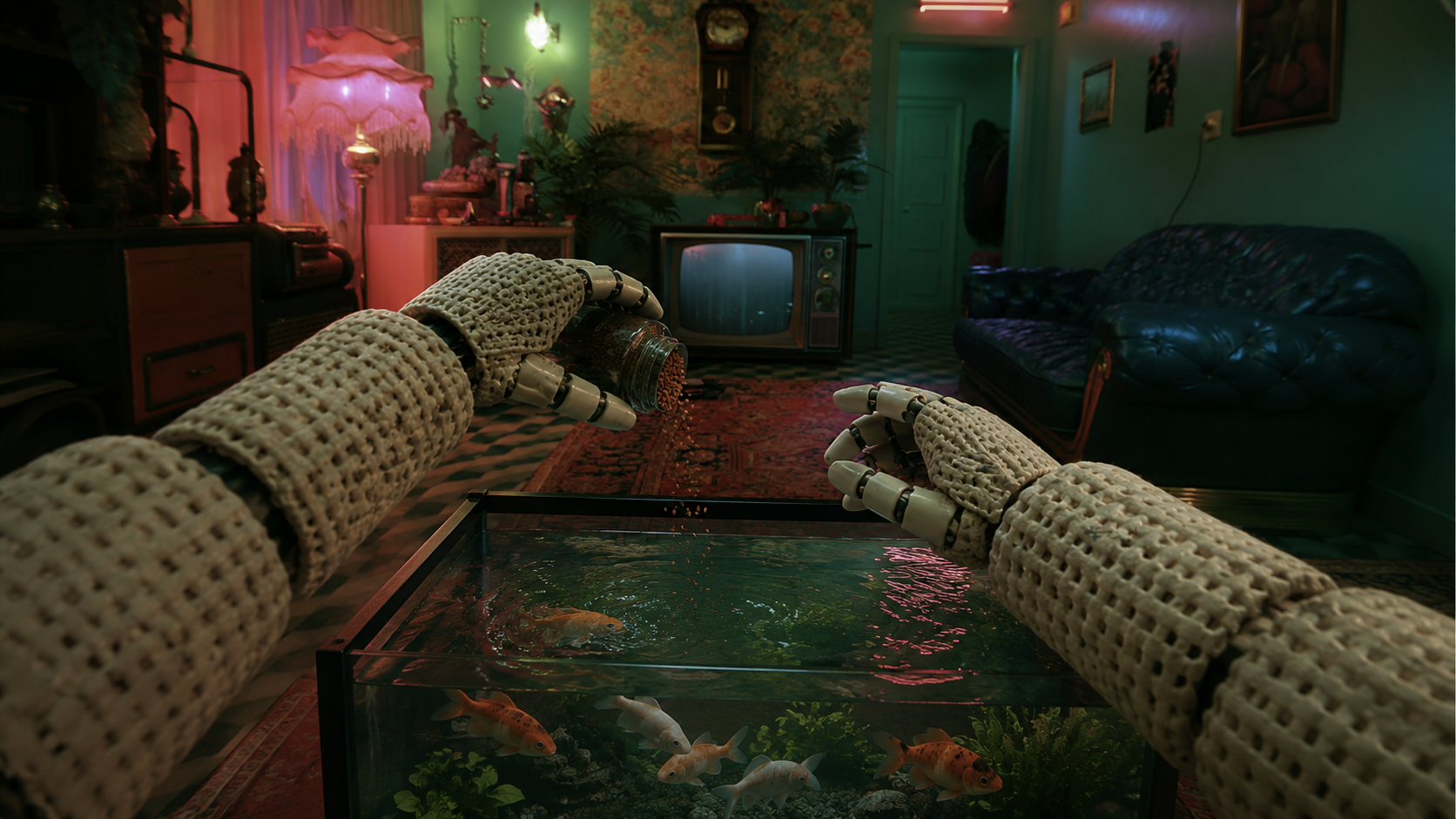
At first, return means taking up an ordinary task that cannot wait. The fish need feeding. The apartment is familiar. The body makes the distance tangible.
Immersive Return
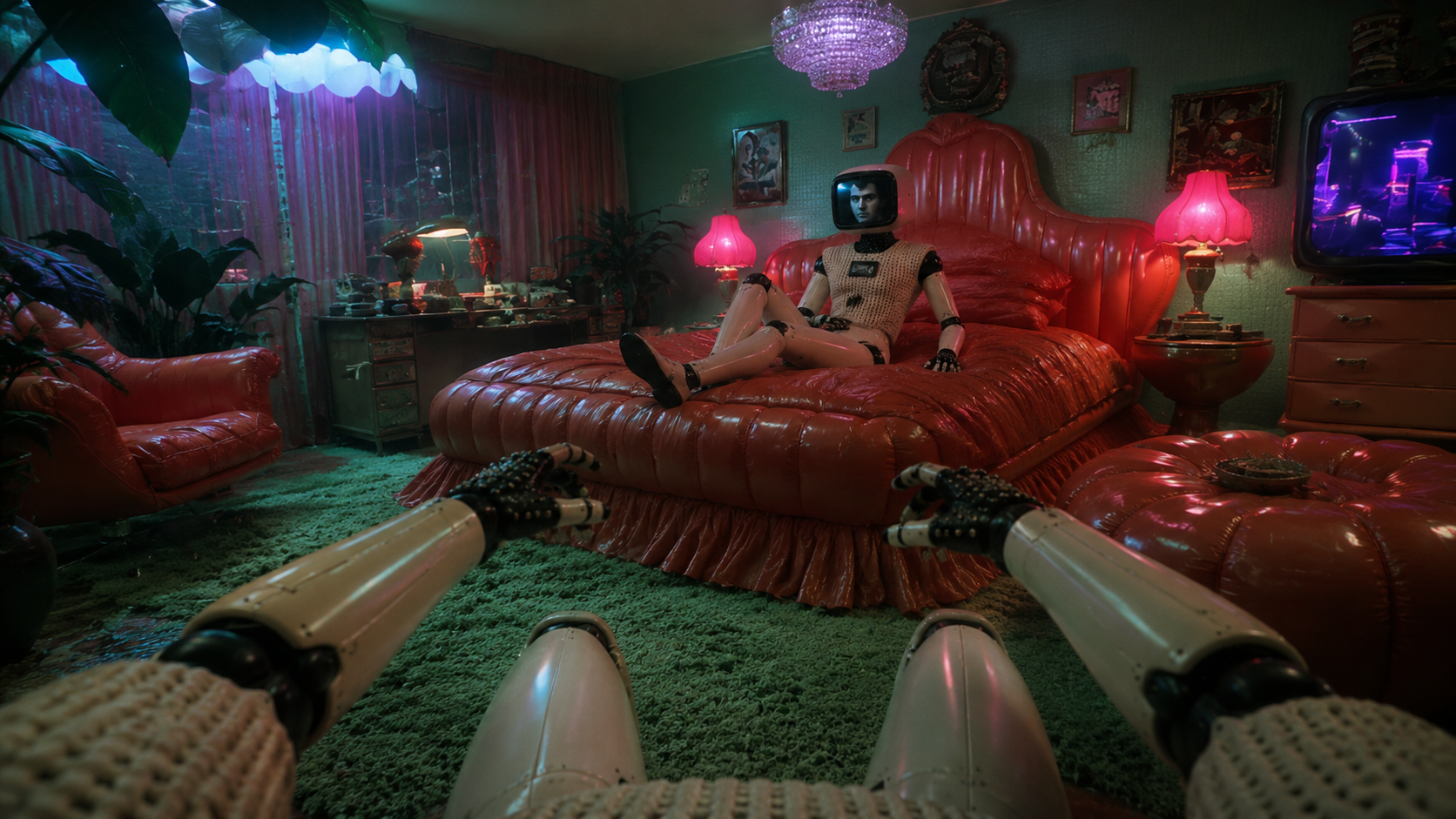
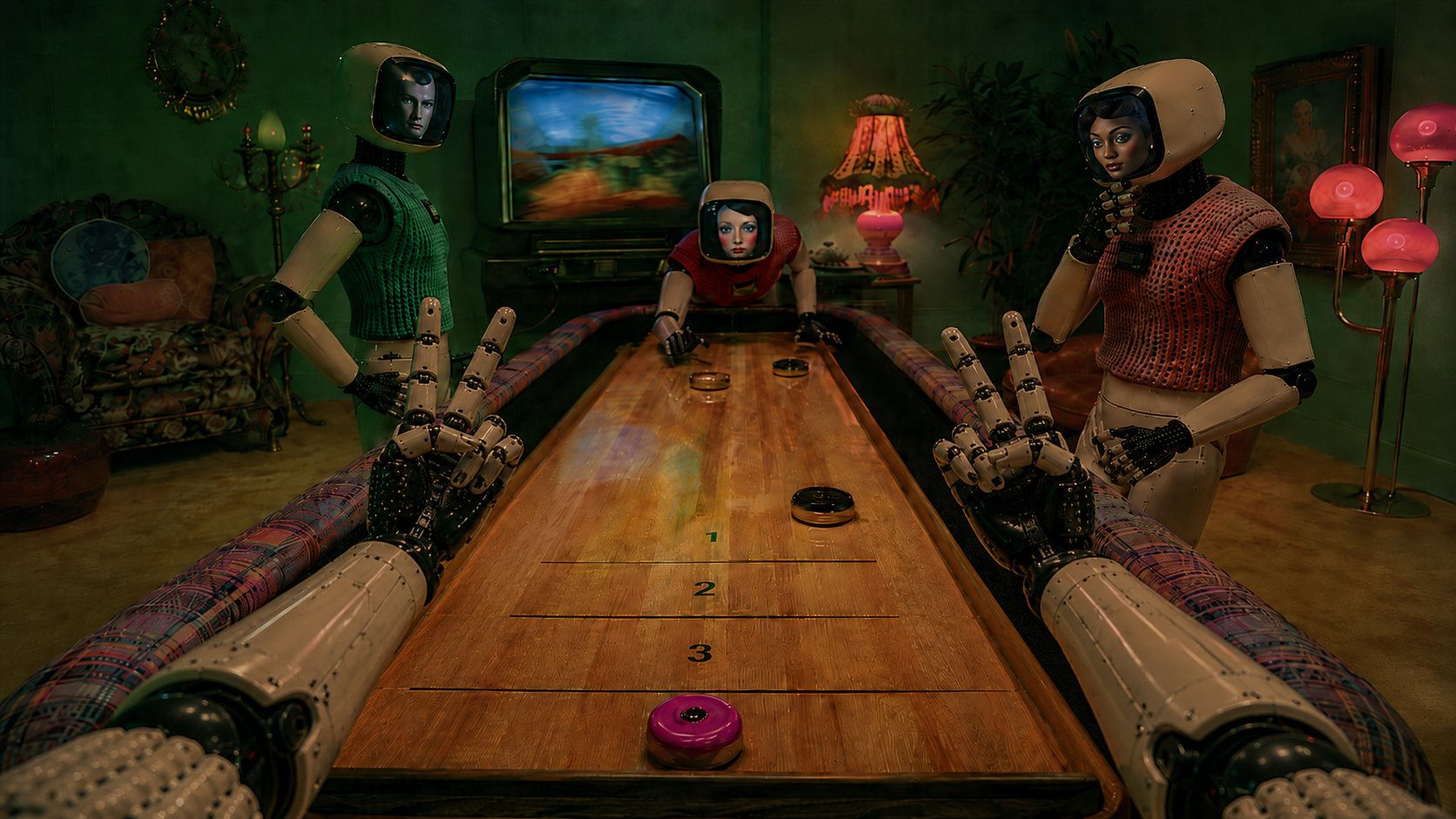
A return can begin with the quiet fact that somebody is already there. The apartment has kept going. There is time to sit together, play a game, or talk before the next task begins.
Immersive Return
The room does not reset when someone leaves. A game can be waiting on the table. A conversation can pick back up. The body gives each return a place in the life already underway.
Third Space · One room, four conditions
The same room remains underneath each view.
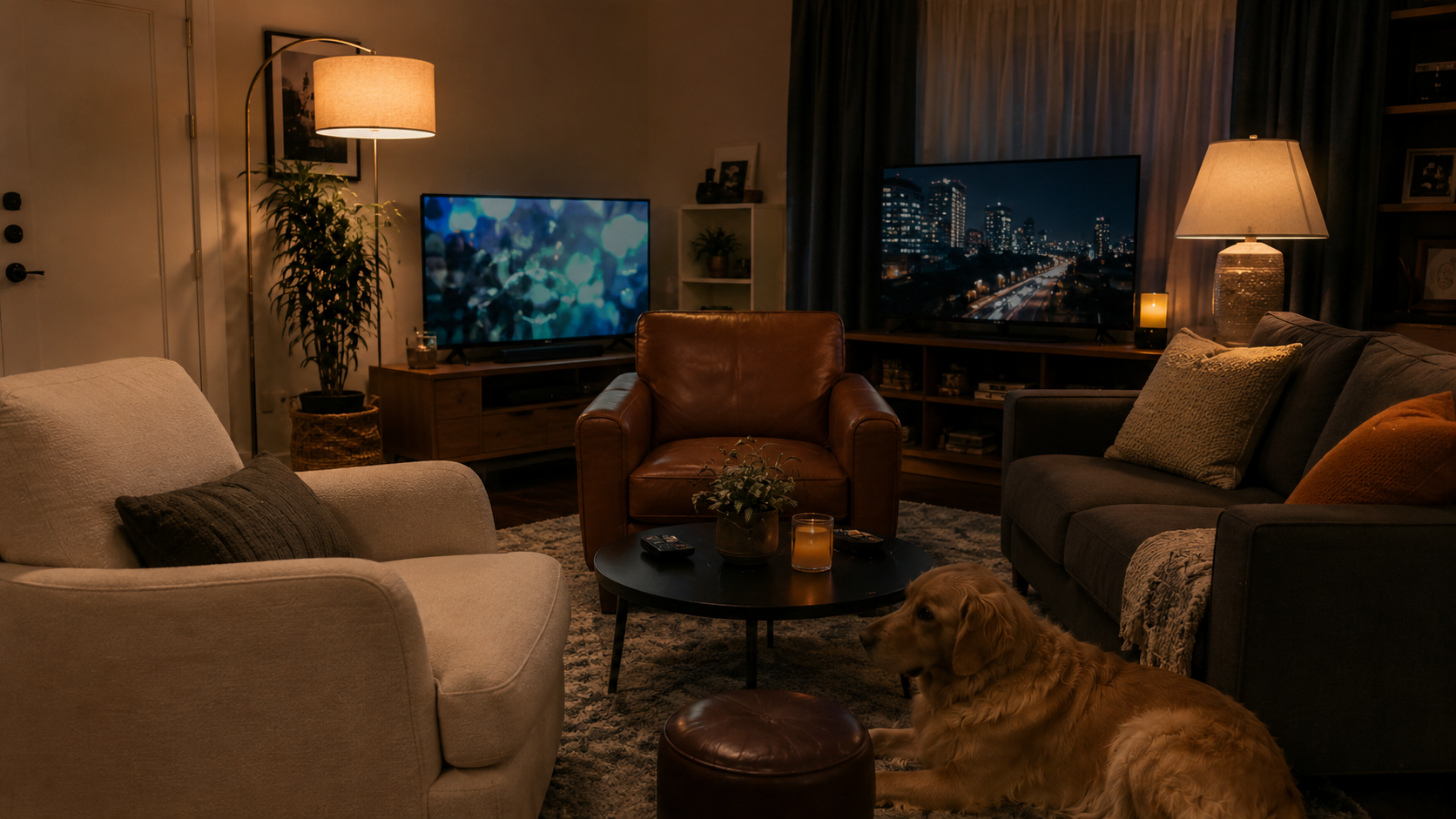
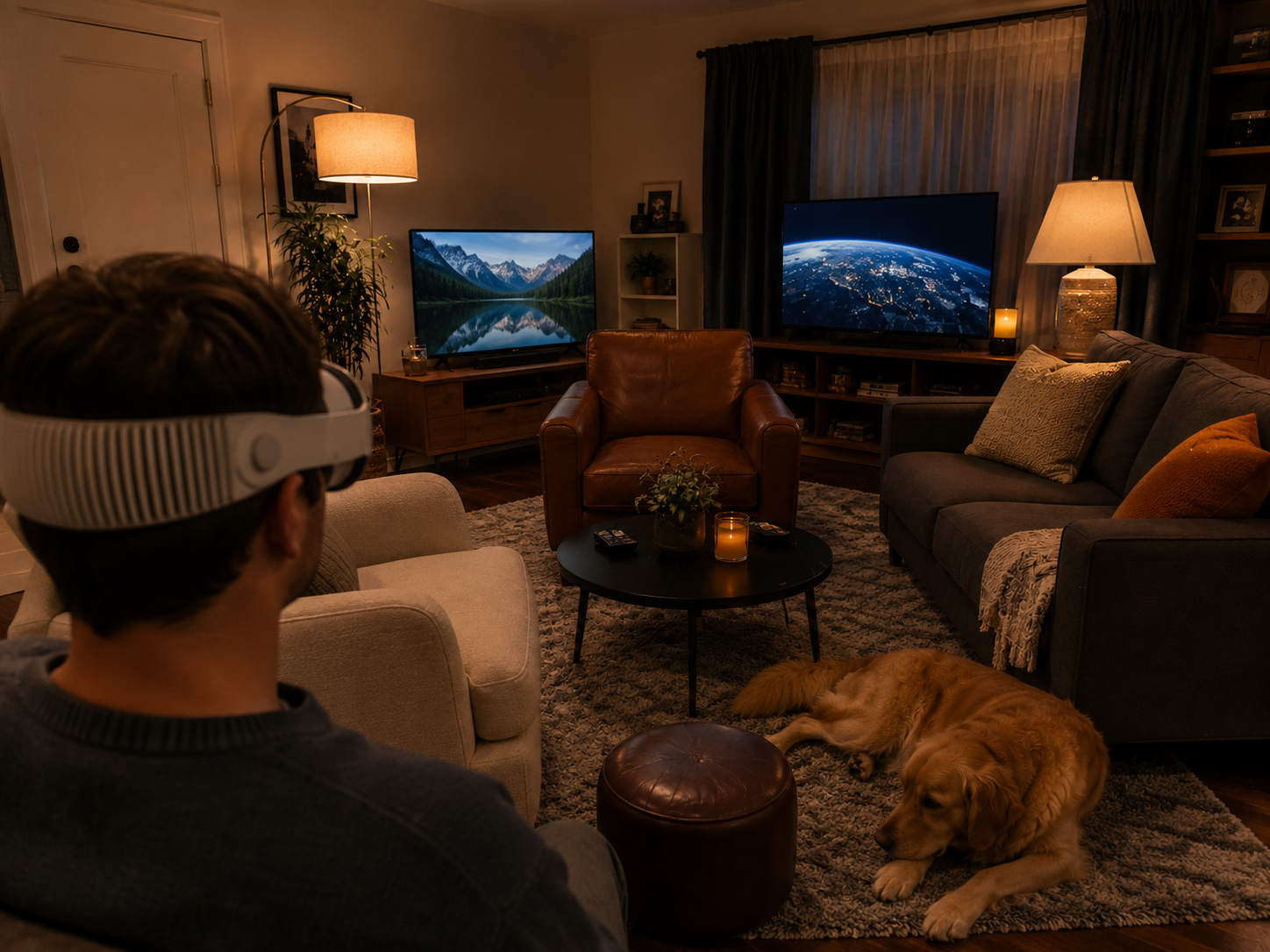
01 · The apartment
The resident’s furniture, television, lamps, dog, and familiar arrangement of things are still here while they are away.
02 · The return
The room remains physically present. A distant resident returns to it through a body that can occupy the same furniture, floor, and open space.
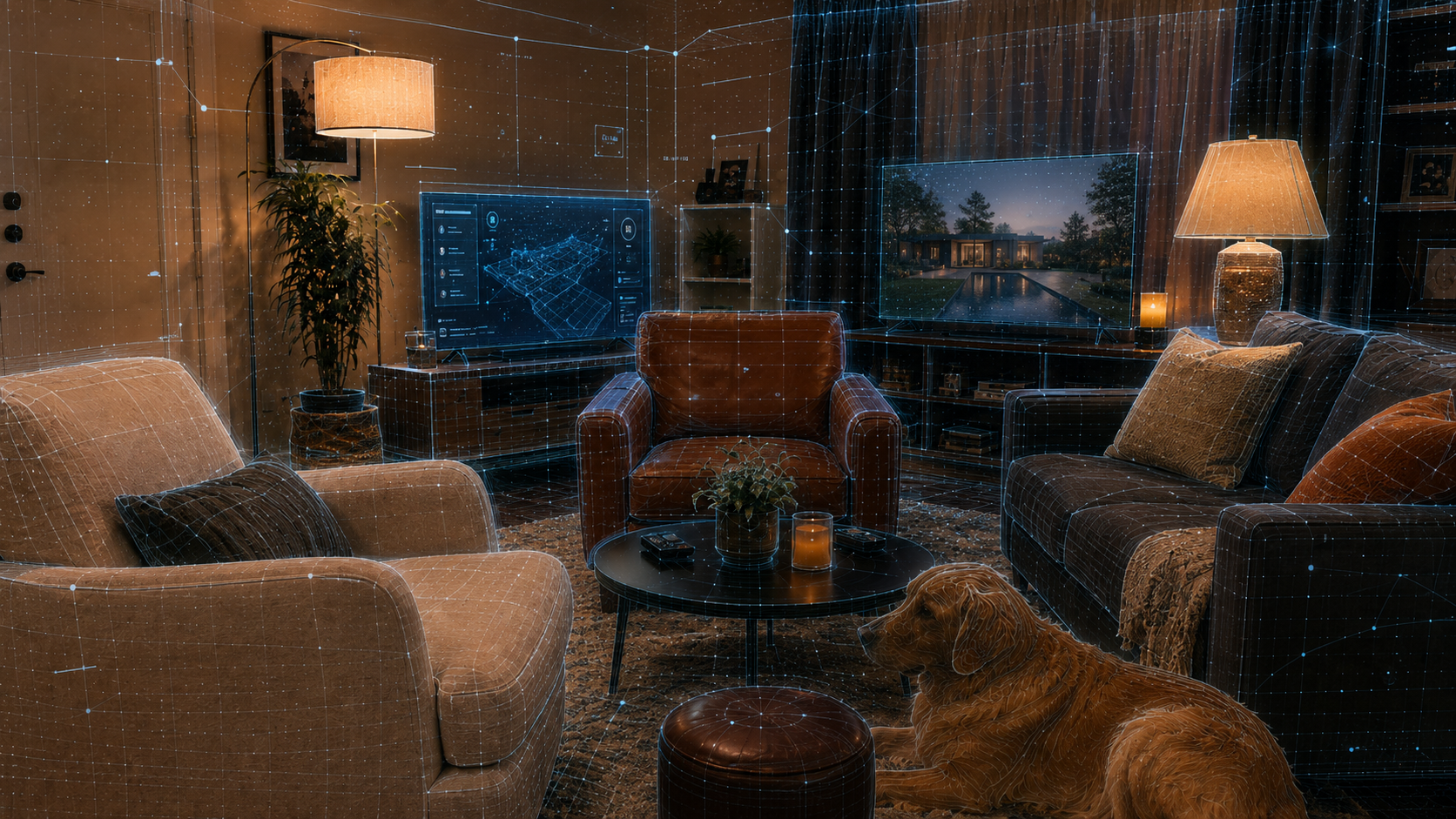
03 · The room read
The headset recognizes the furniture, floor, walls, and open areas. Those familiar objects give the returning tenant somewhere to be.
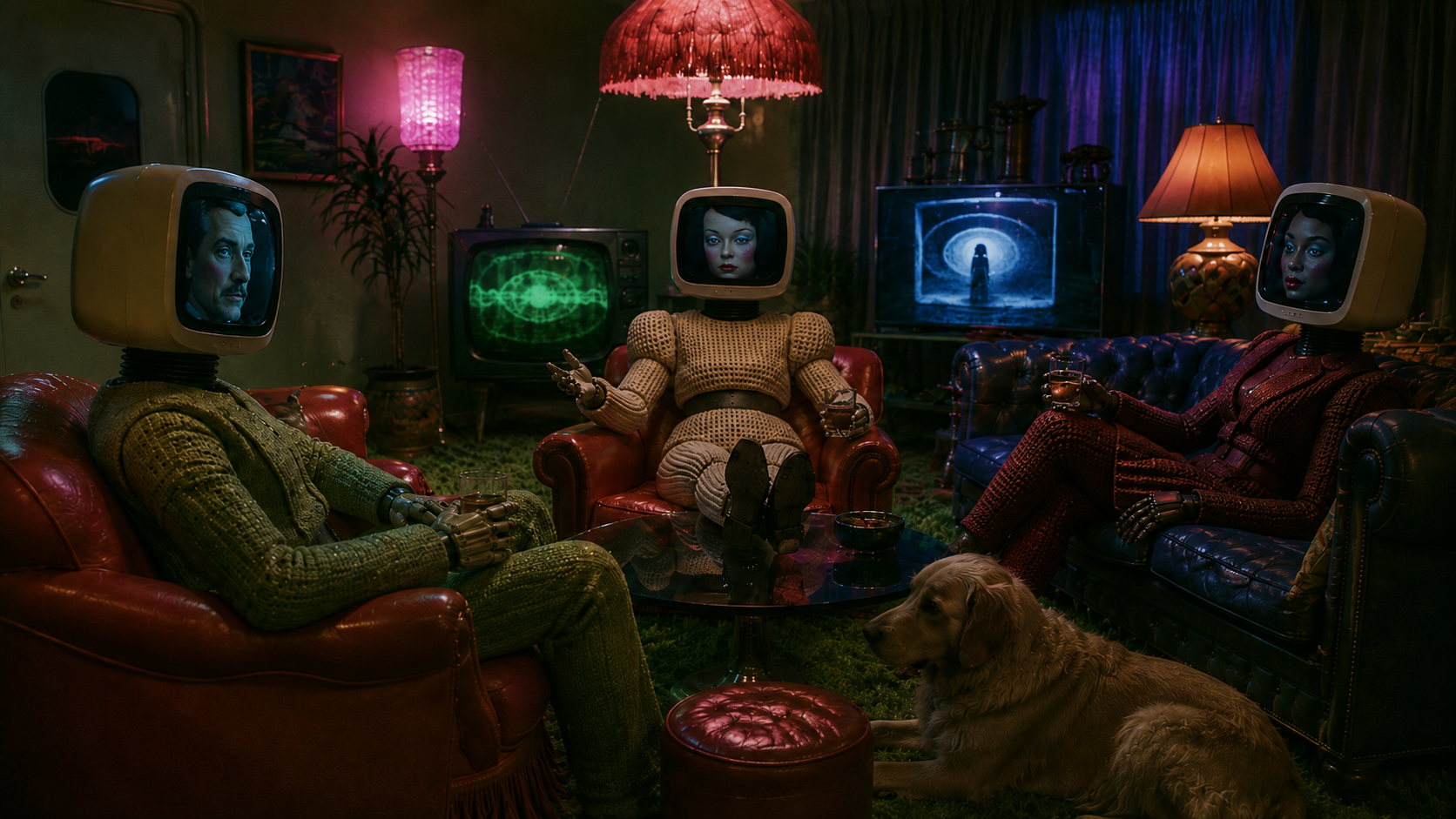
04 · The apartment receives its tenants
The same layout takes on another atmosphere. Familiar objects shift in color and surface. Robot bodies enter the room and the domestic story resumes.
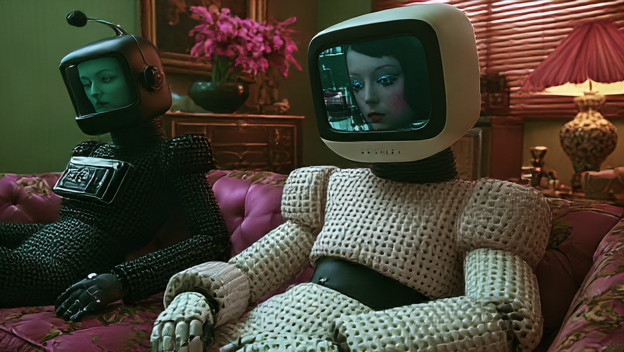
The cast includes people in the building and robot bodies that move through its rooms. A robot can be in house mode, carrying out an ordinary task, or it can be occupied by a resident who has entered from elsewhere.
The screen makes the difference visible. A neutral house face appears when a body is cleaning, folding laundry, feeding an animal, or taking care of the apartment. A resident’s face or chosen avatar appears when that person is present and available to speak.
Third Space
Remote residents arrive as bodies in the room. They can speak, sit, play a game, or carry on whatever is happening when a tenant arrives.
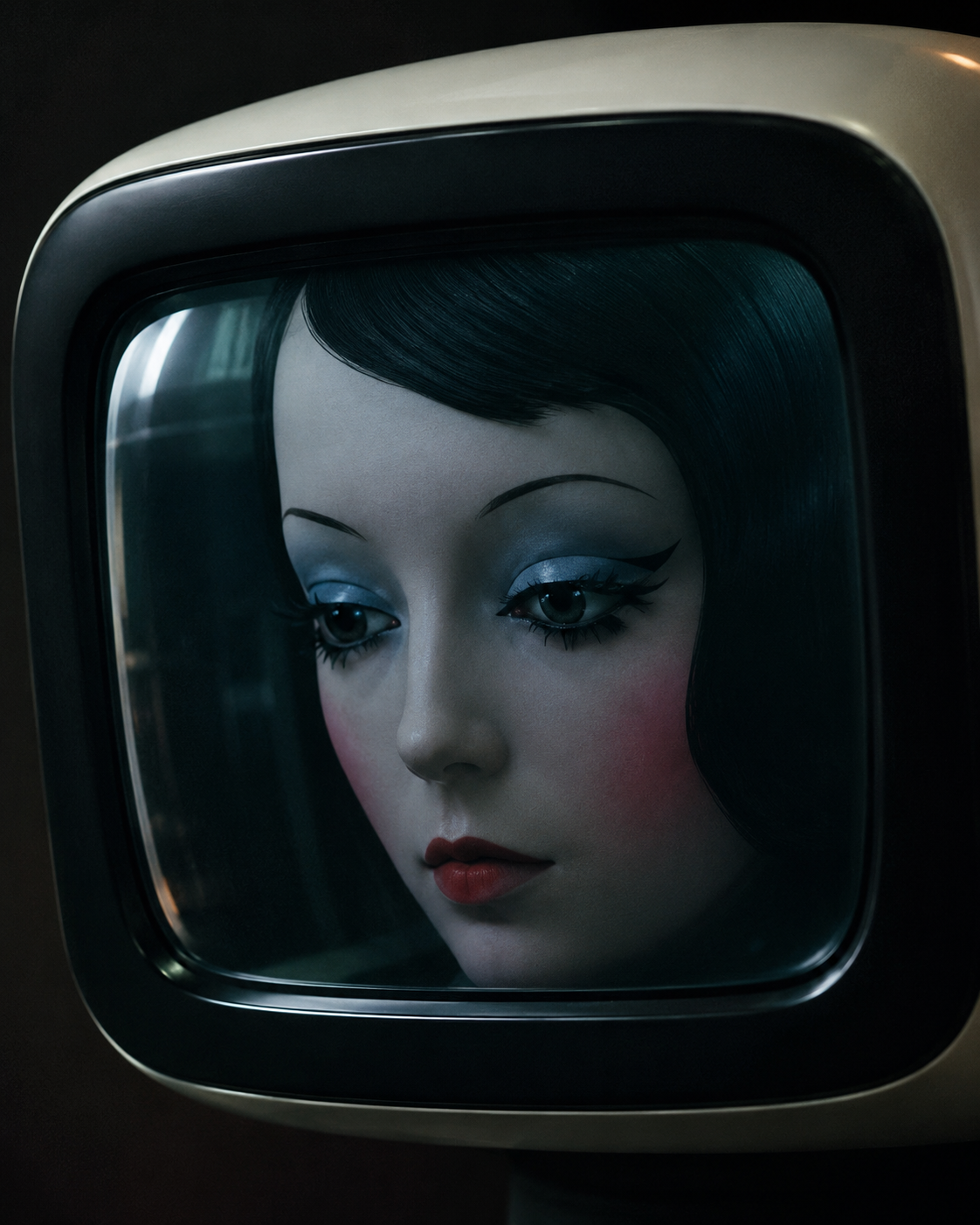
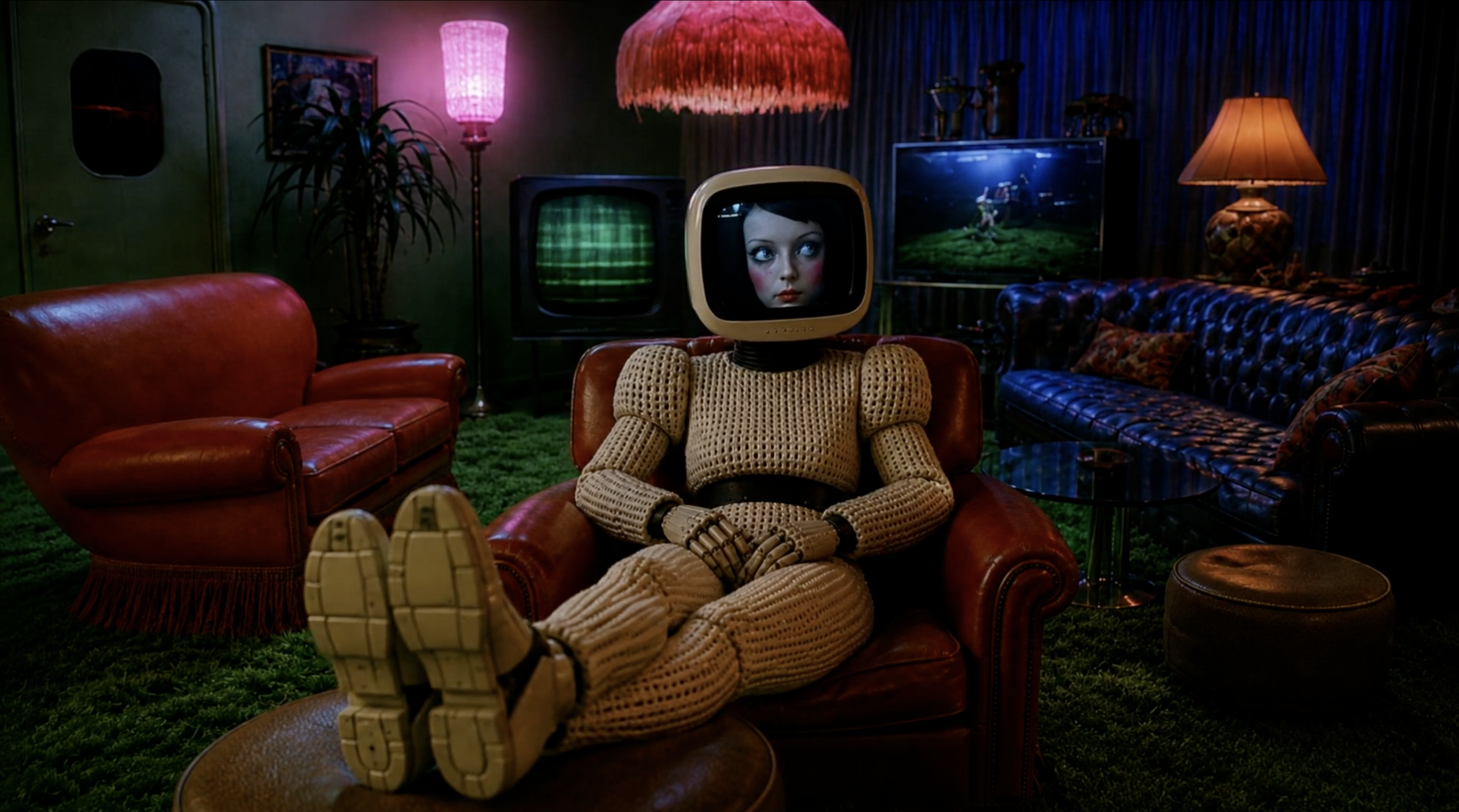
The system recognizes safe floor, furniture, walls, and surfaces. It places a limited number of bodies and props. Virtual skins give portions of the visitor’s actual room a new visual condition.
The building continues in house mode between visits. When a tenant enters a body, the social situation changes. They might take care of an animal, resume an argument, avoid a neighbor, or discover that something has changed in their absence.