Formats

How it appears

One authored presence, many forms. The construct underneath every line runs the same, and it is sited to the space and the budget in front of it, from a browser screen to a monolith in regional stone.

Four ways a presence is sited
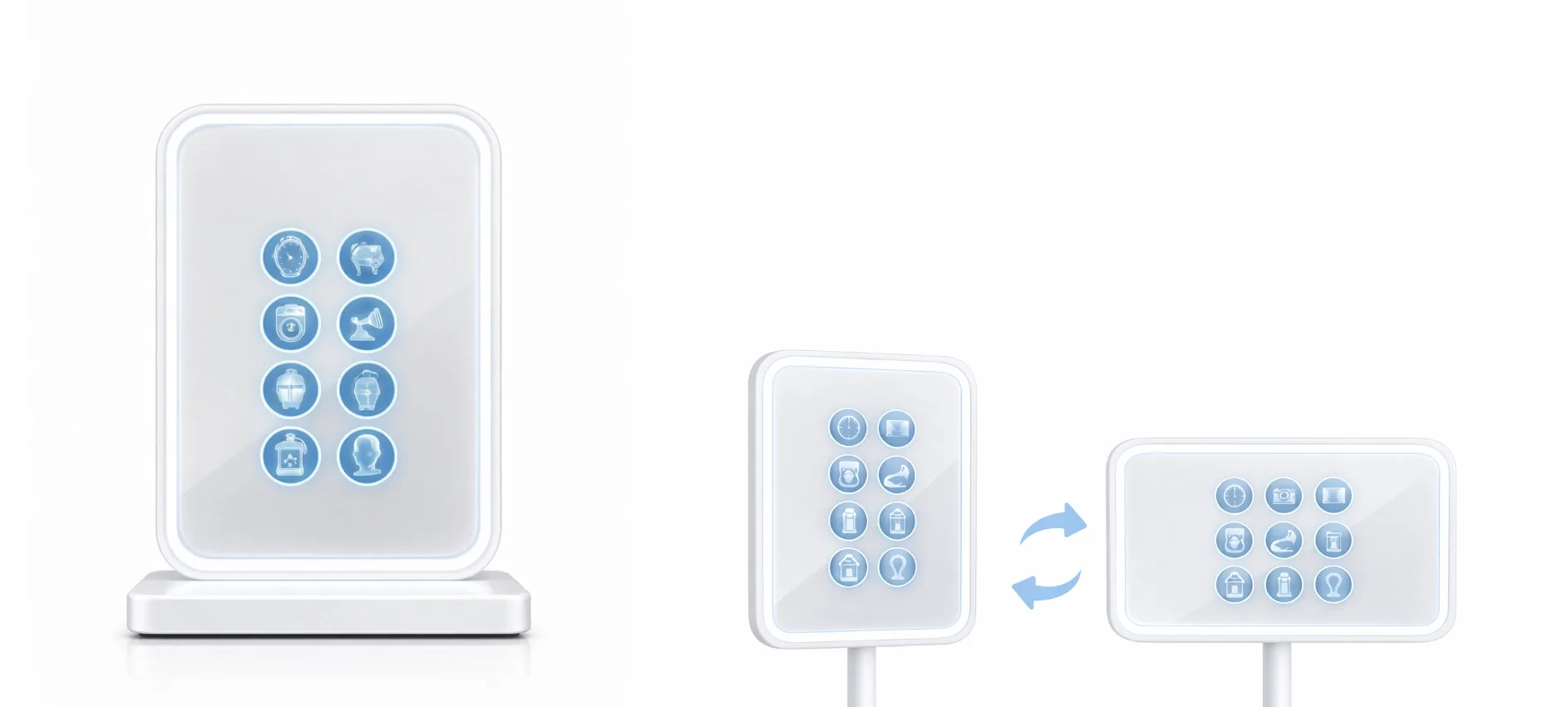
Tabletop: A desk-scale object or screen for a study, a library carrel, a classroom, or a kiosk. The smallest way a presence can be sited.
Tabletop A desk-scale object or screen for a study, a library carrel, a classroom, or a kiosk. The smallest way a presence can be sited.
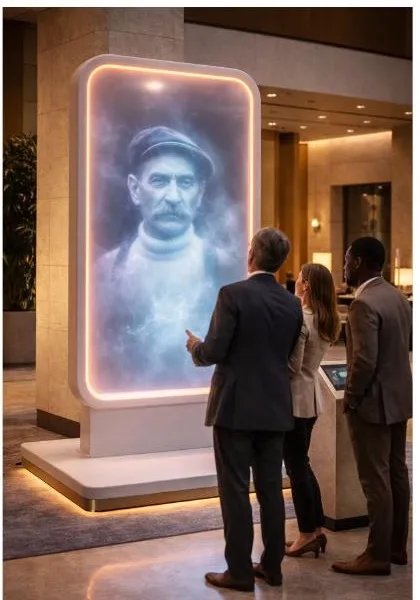
Transparent display: A large transparent panel that holds a presence at human scale in a lobby, a gallery, or a foyer.
Transparent display A large transparent panel that holds a presence at human scale in a lobby, a gallery, or a foyer.
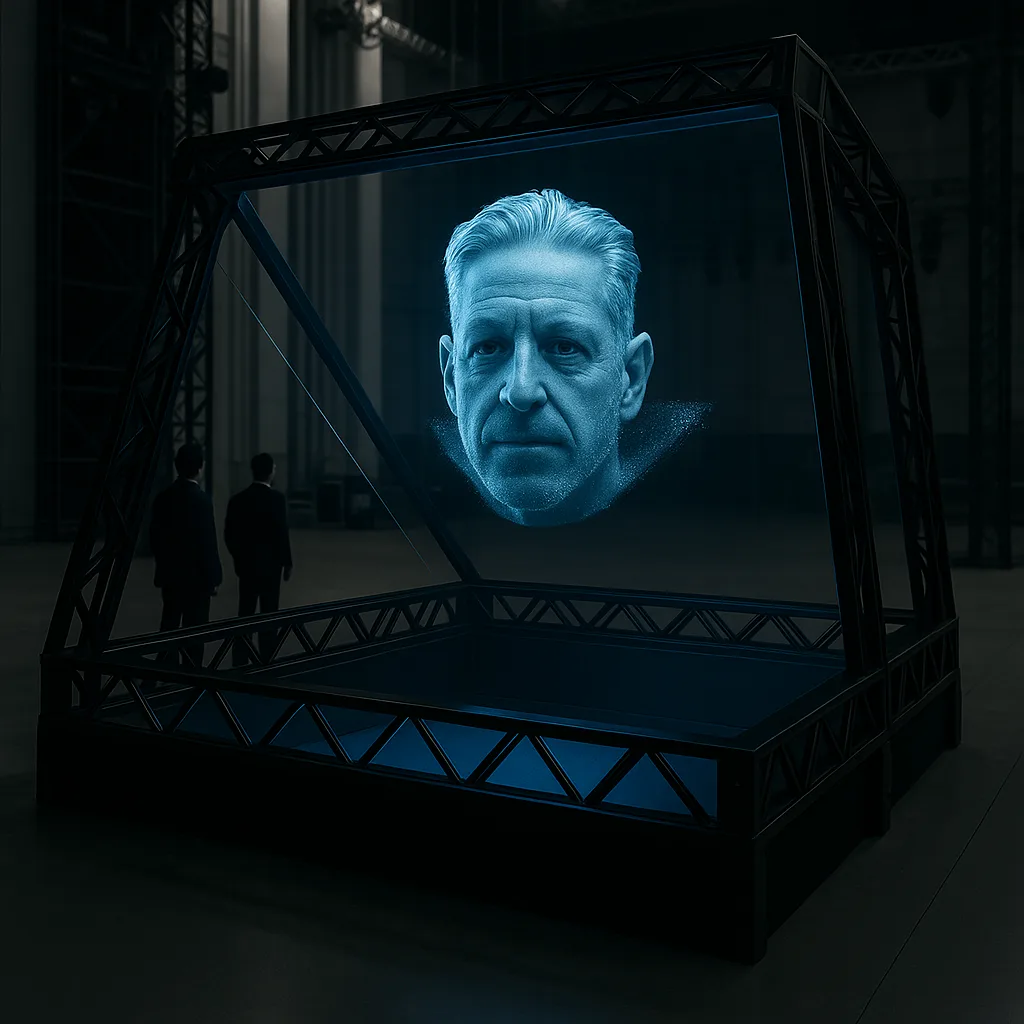
Holographic array: A volumetric image that reads as present in the room, without glasses or a headset.
Holographic array A volumetric image that reads as present in the room, without glasses or a headset.
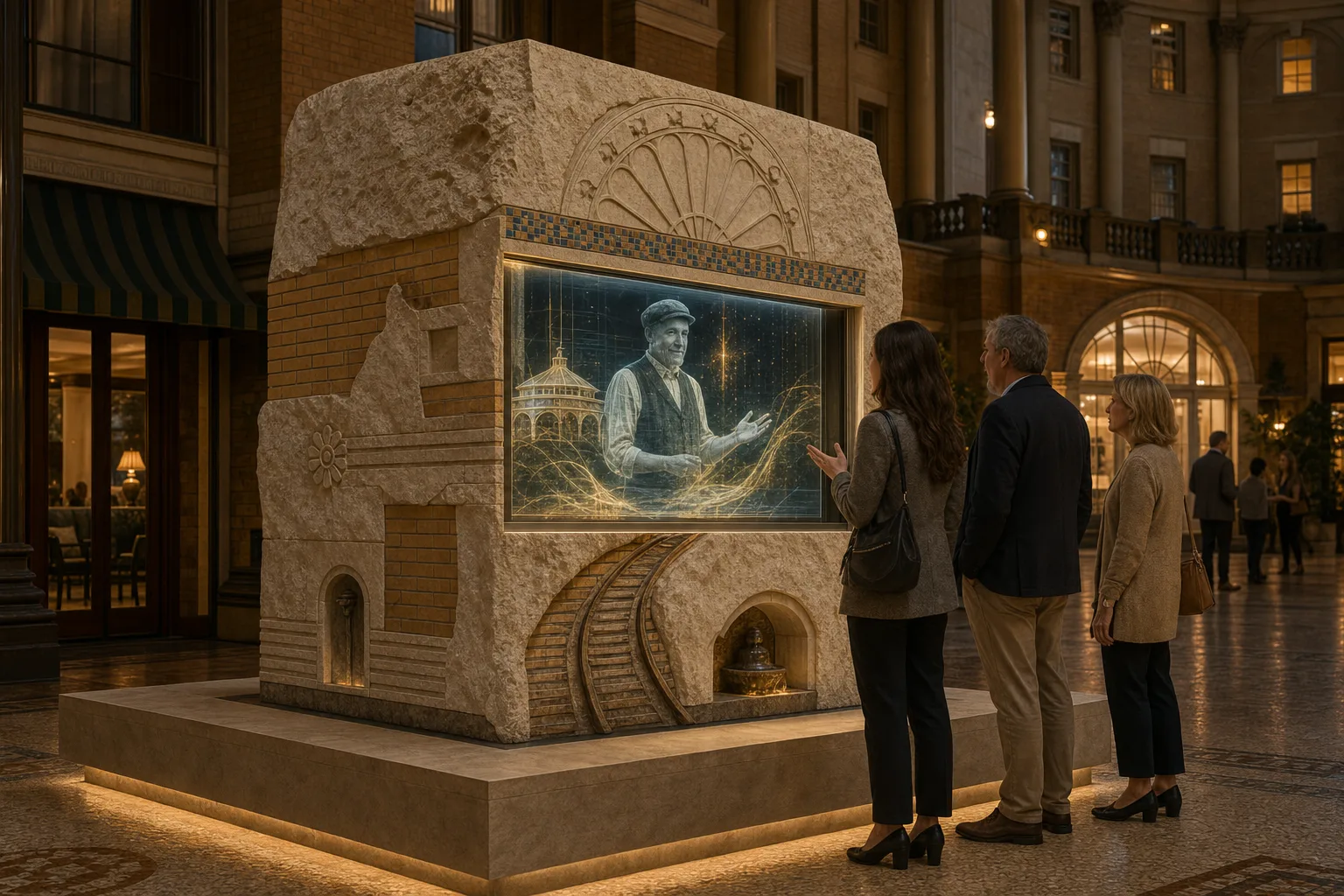
Monolith: A freestanding form in regional stone or brick, at tabletop or architectural scale, for civic and public sites.
Monolith A freestanding form in regional stone or brick, at tabletop or architectural scale, for civic and public sites.

And beyond the four

The same presence also runs as a plain browser interface, a headset experience, a glasses-free desktop display, a life-size telepresence panel, transparent film over glass, projection onto a surface or a sculpted form, or a stage illusion in the manner of a Pepper's ghost.

The presence does not change with the enclosure. Authored once, it can be met on a phone, in a gallery, or carved into a civic landmark, and the choice is a question of room, audience, and budget rather than a separate build.
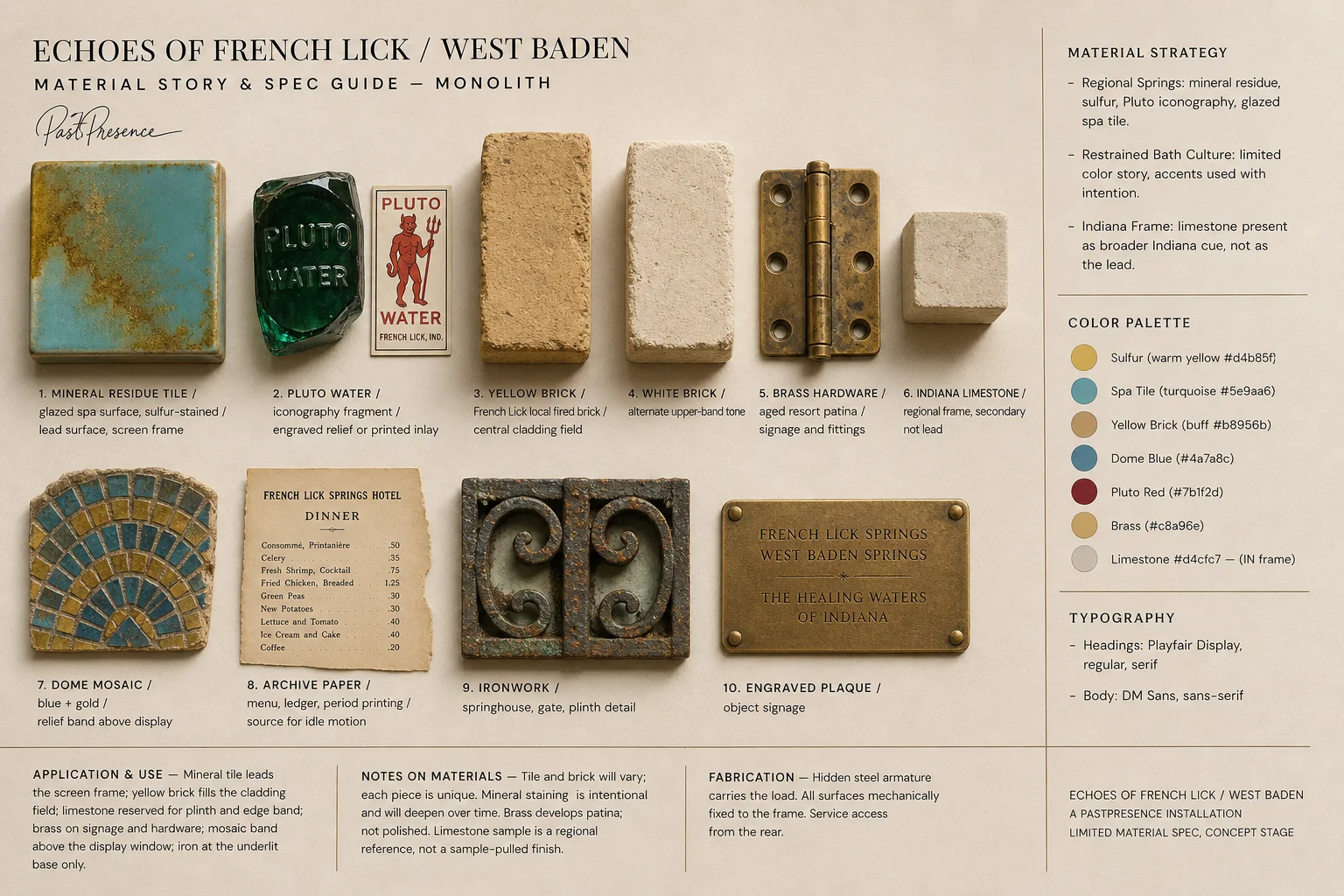
A material and scale guide for a regional monolith: stone and brick options with dimensions and specifications.
A material and scale guide, drawn up per site.

Find the form that fits the room.

Book a walkthrough →