A single figure, sited and grounded
Kindred Spirits
At an author house, a museum, a library, visitors encounter conversational likenesses of personages from the past.
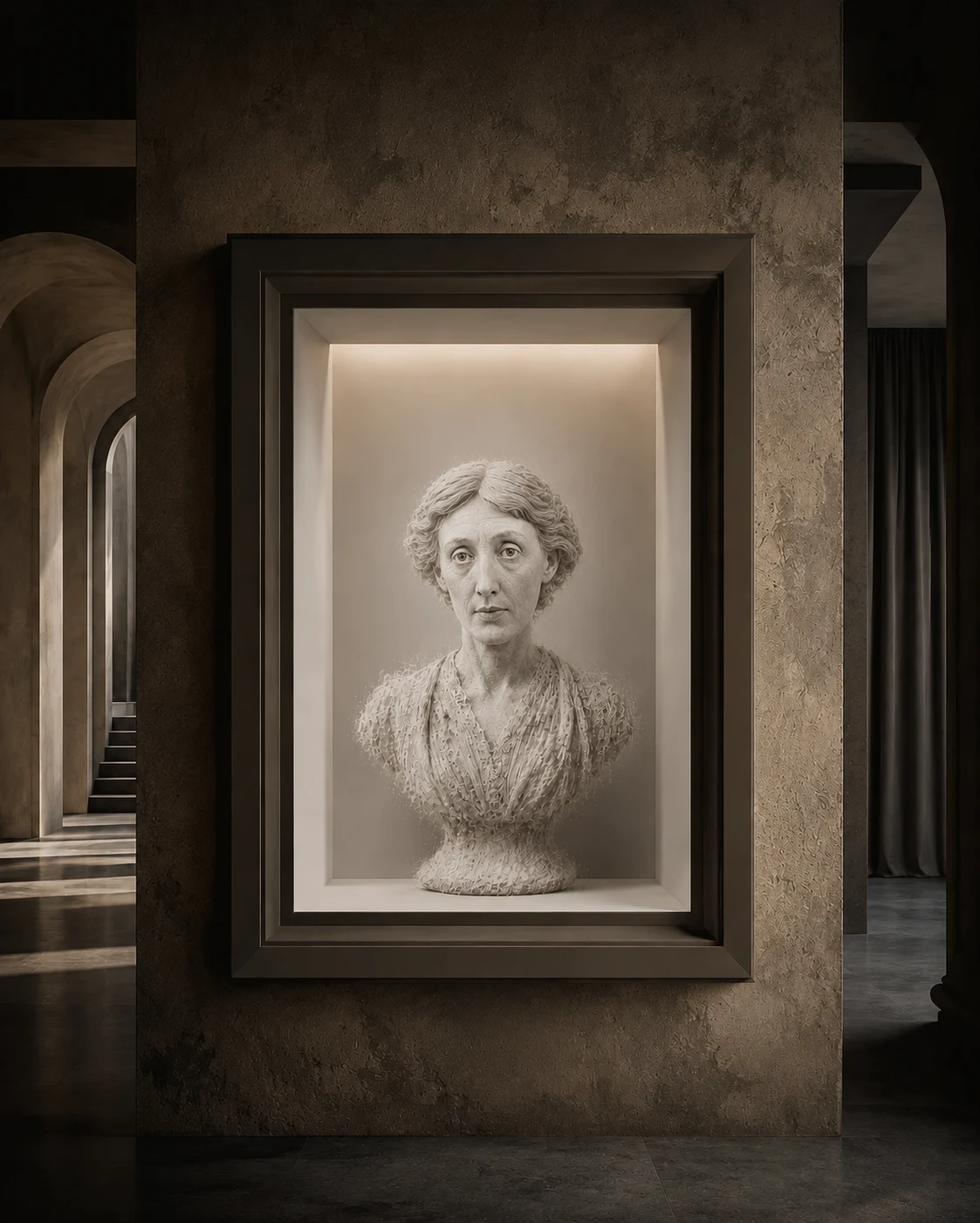
Kindred Spirits presents these figures as vital presences: holographic heads and virtual busts that spring to life when roused. Visitors put their questions to minds they had otherwise met only between the pages of a novel, in a history book, or in a footnote. Like reenactors, the presences follow no script. Replies are live, shaped in the moment by the person to whom they are speaking. Each figure is anchored in a corpus of writings, letters, and biographical scholarship.
Un-still Life
Un-still Life is one of several formats in which a Kindred Spirits persona may be presented.
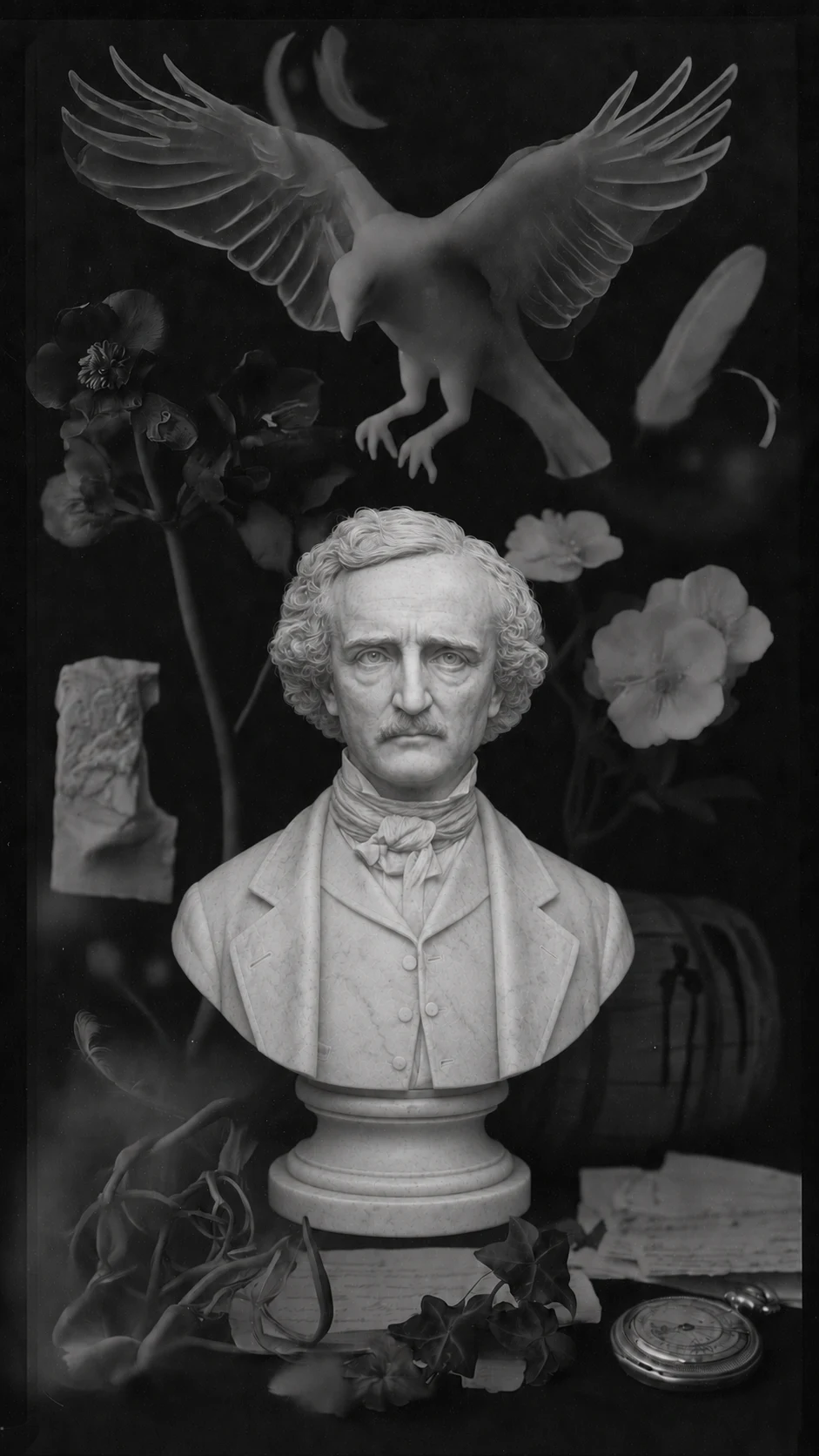
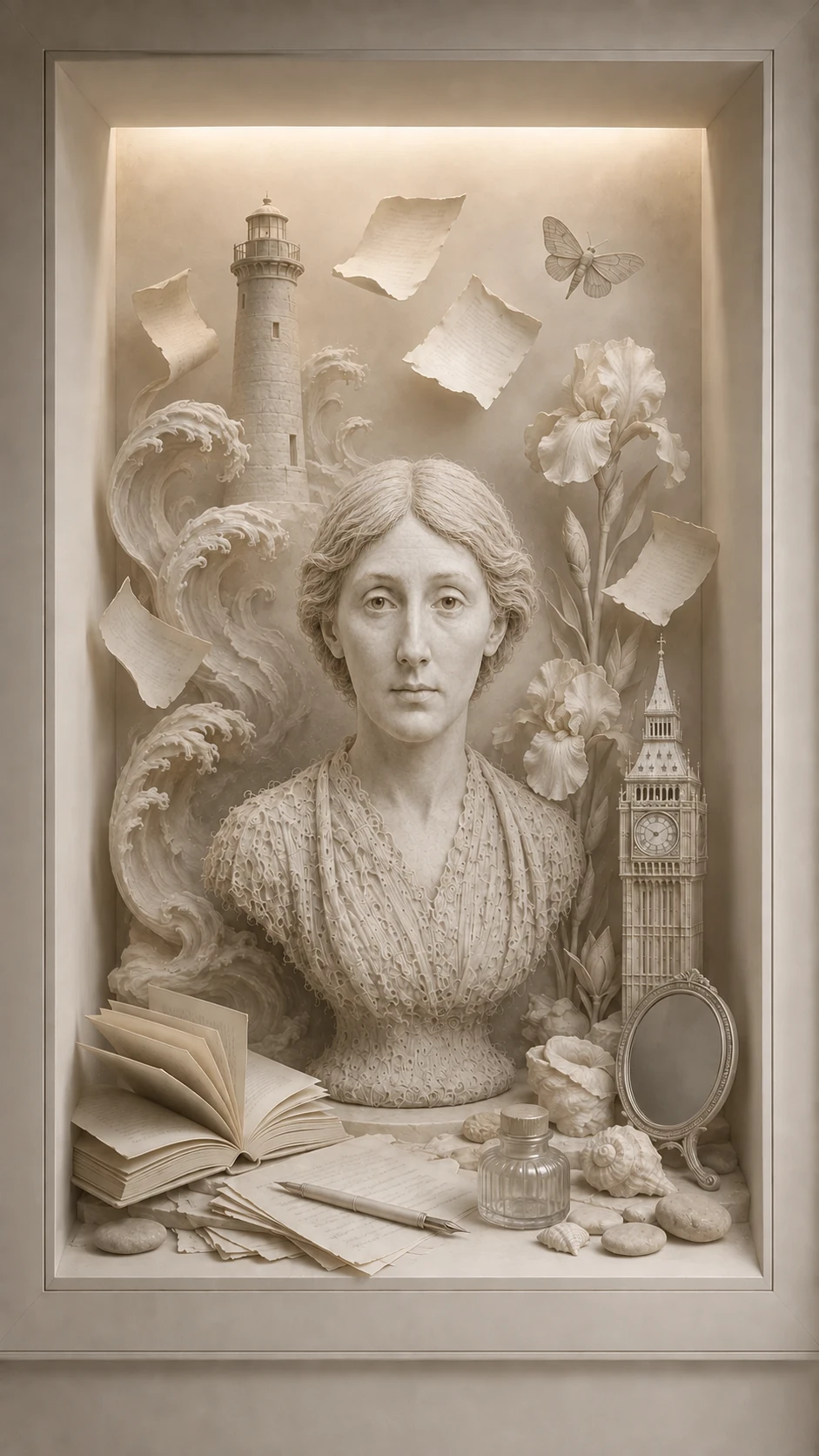
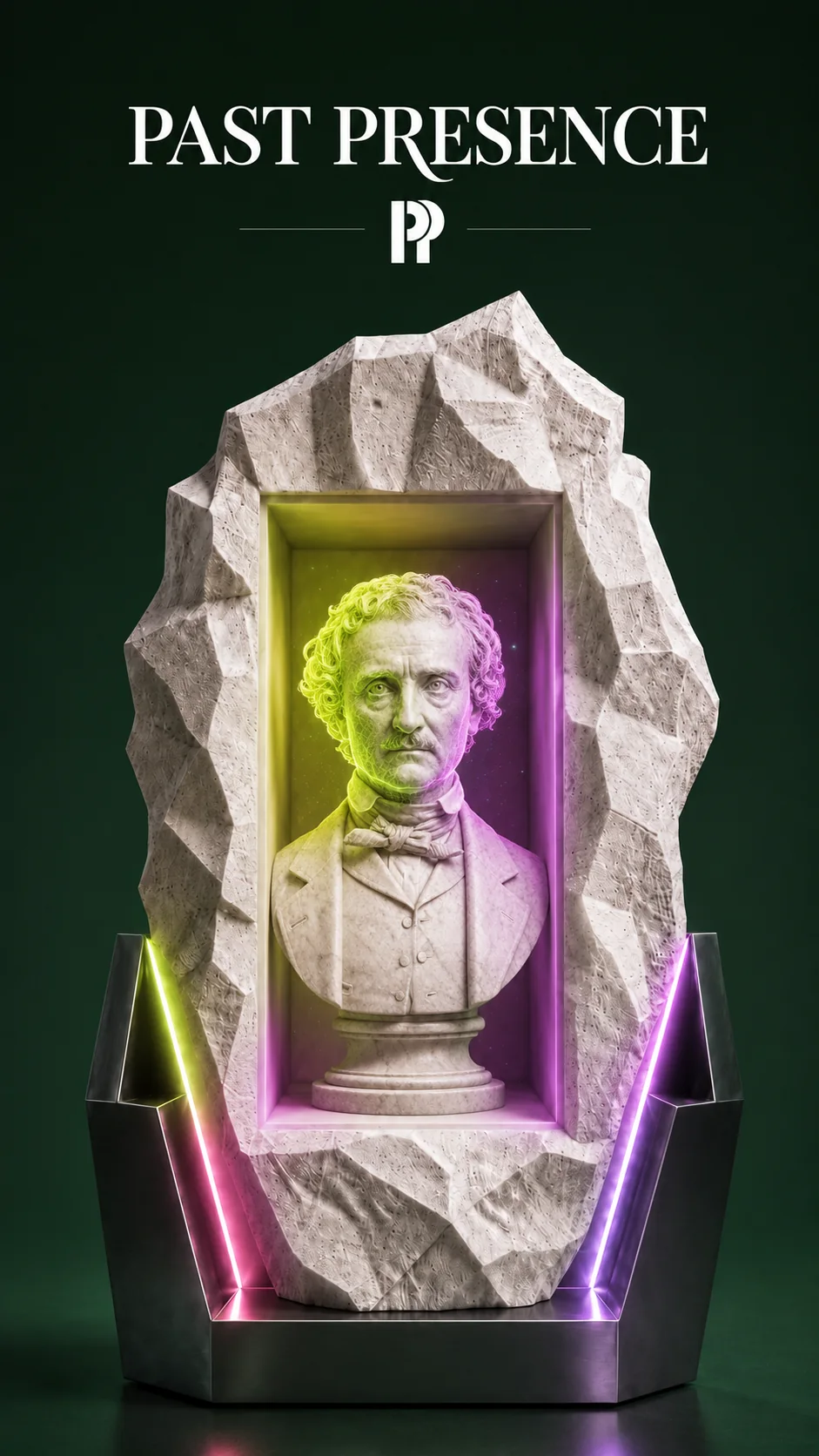
The Un-still Life compositions visualize the persona as a sculpted bust set within an arrangement of still-life objects that relate to the life and work of the subject. The artworks appear similar to still lifes, but they move. Objects spin and turn and drift through the space, and in that way they are rendered un-still.

Optional display control
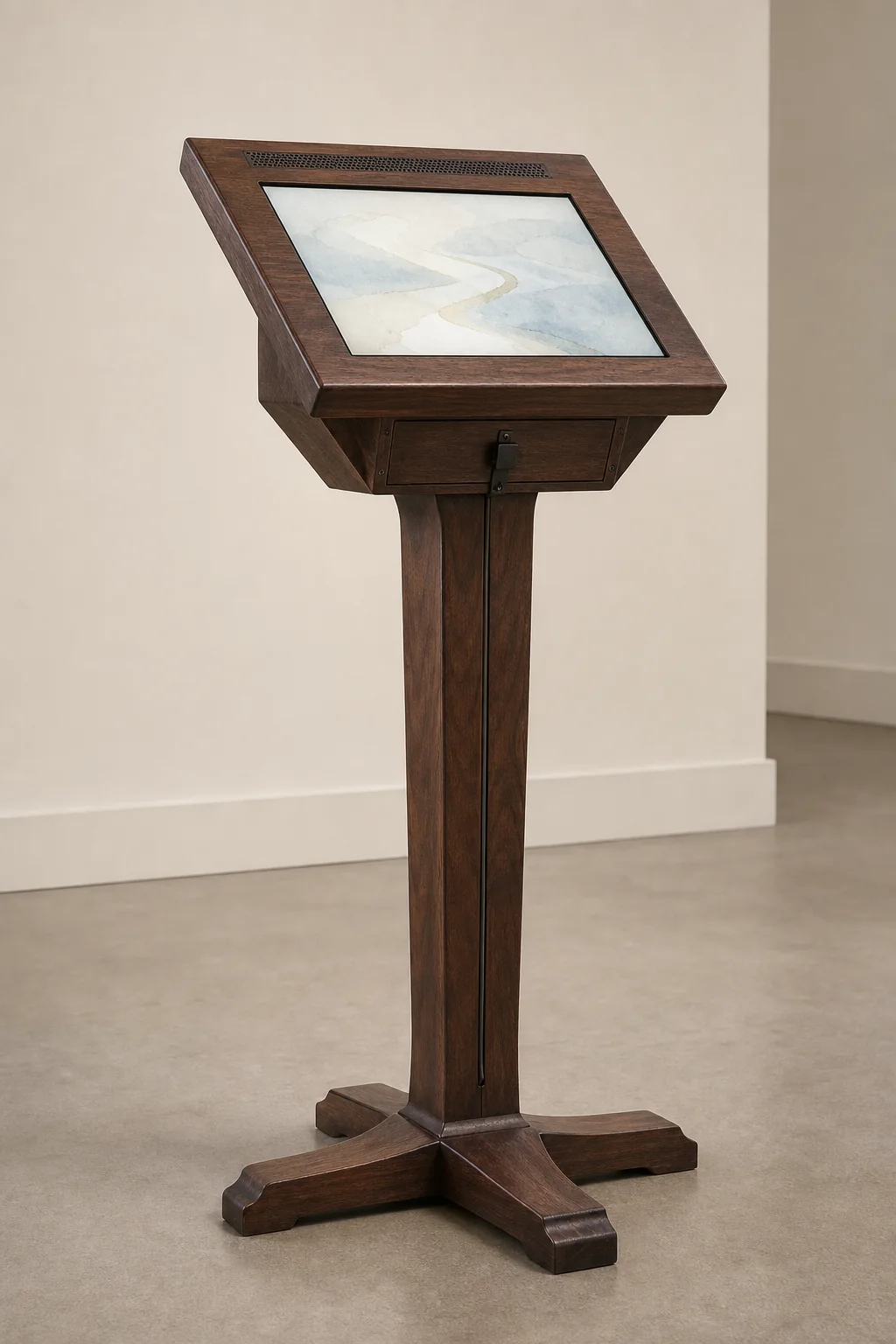
An optional small display-control screen allows visitors to select a preferred conversational level before speaking. The selection adjusts vocabulary, pacing, and depth while the figure remains the same. Staff may use the screen to access the experience when needed.
The presence
The likenesses take the form of sculpture or spectral presences rather than naturalistic people.
Curators and scholars from the PastPresence team and from the host institution set the boundaries of the corpus: what belongs, what is left out, where the material runs thin.
Visitors ask questions or make observations and receive replies. The presence cites its sources. When it does not know, it says so.
Where the Echoes experiences present visitors with a cast of characters and archetypes from a given region or site, Kindred Spirits experiences are devoted to individuals.
The figures
The personas the studio gravitates toward are those whose legacy has shaped creative culture and helped cultivate an interest in interiority.
We are drawn to individuals who were not one-dimensional: significant not just for their production and the artifacts they left behind but for the complexity and contradiction of their lives. Those lives were seldom tidy. They prove revealing of human behavior, as relevant and familiar now as ever.
Each installation is developed with the institution that commemorates the person. The practice extends to any figure whose record can sustain a conversation.
For darker spaces
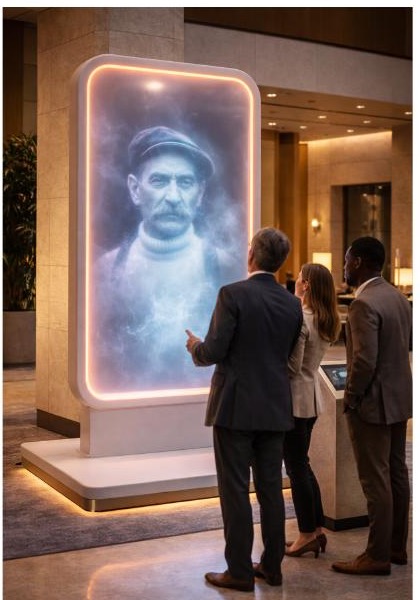
Aside from the Un-still Life compositions, PastPresence also creates spectral likenesses, presences intended for darker spaces and holographic display. The underlying system and the sourcing approach are identical to those described above. The aesthetic differs: smoke, fluid dynamics, the look of a digital transmission. Here James Whitcomb Riley resolves out of an ambient field into a face.
Form and material
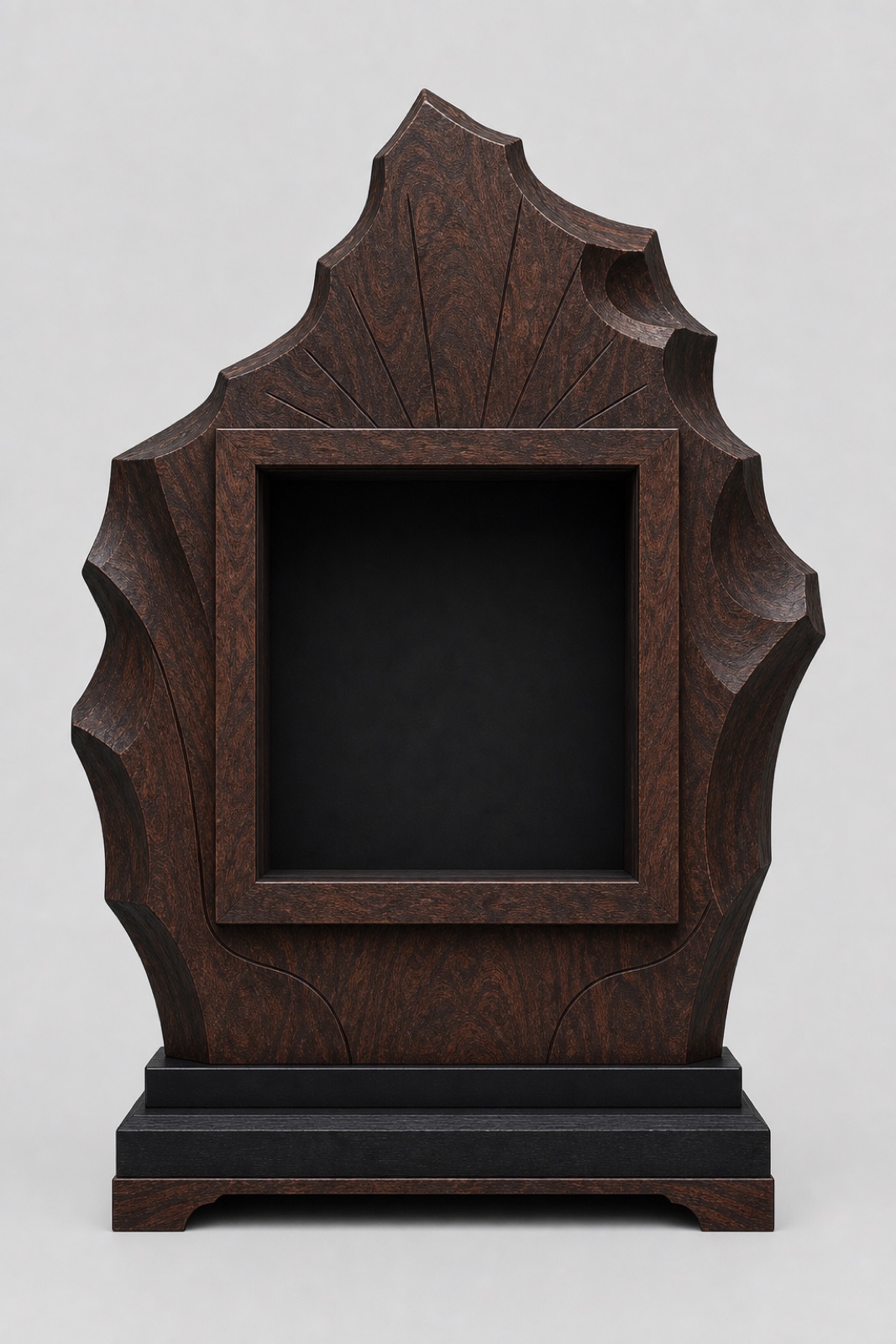
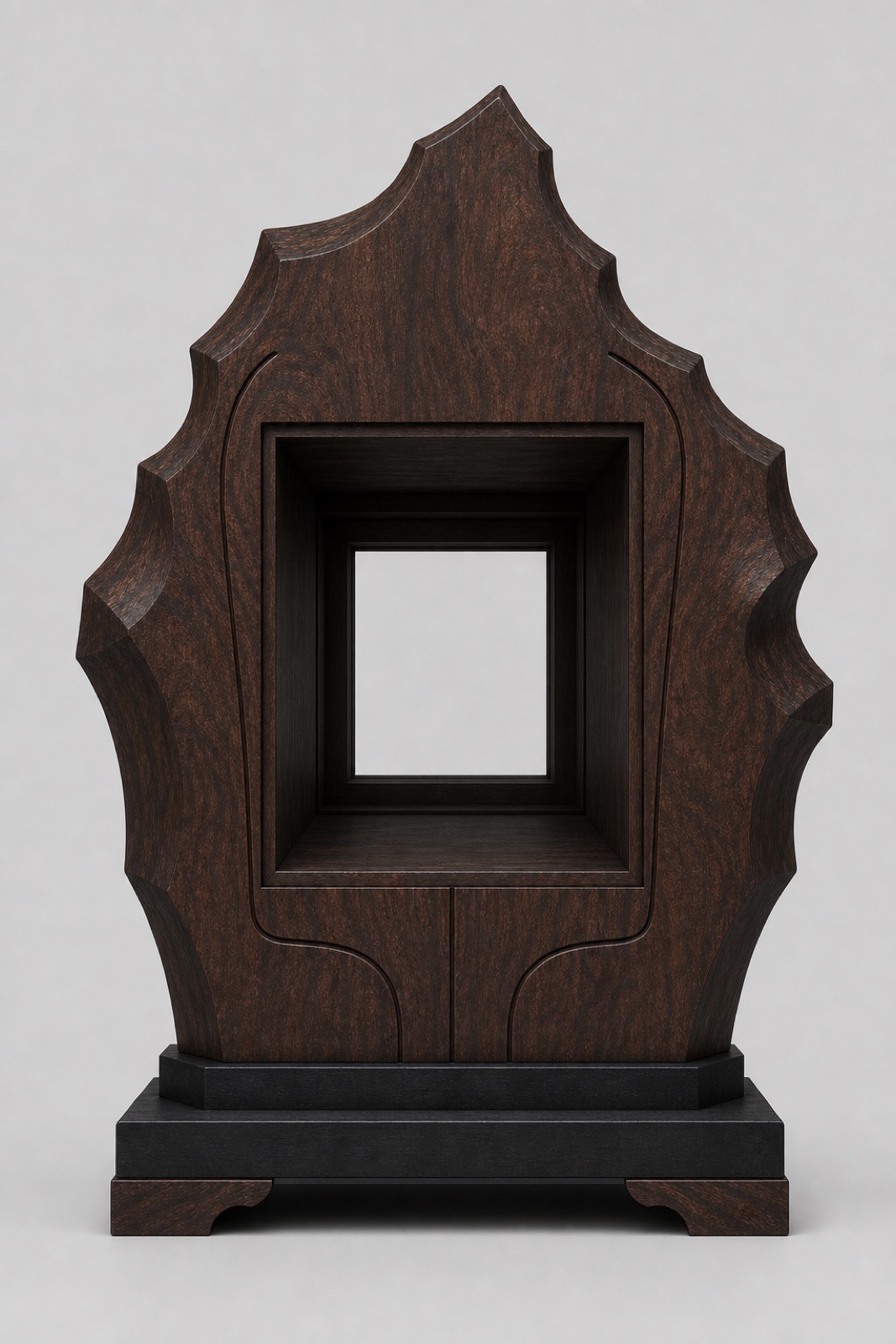
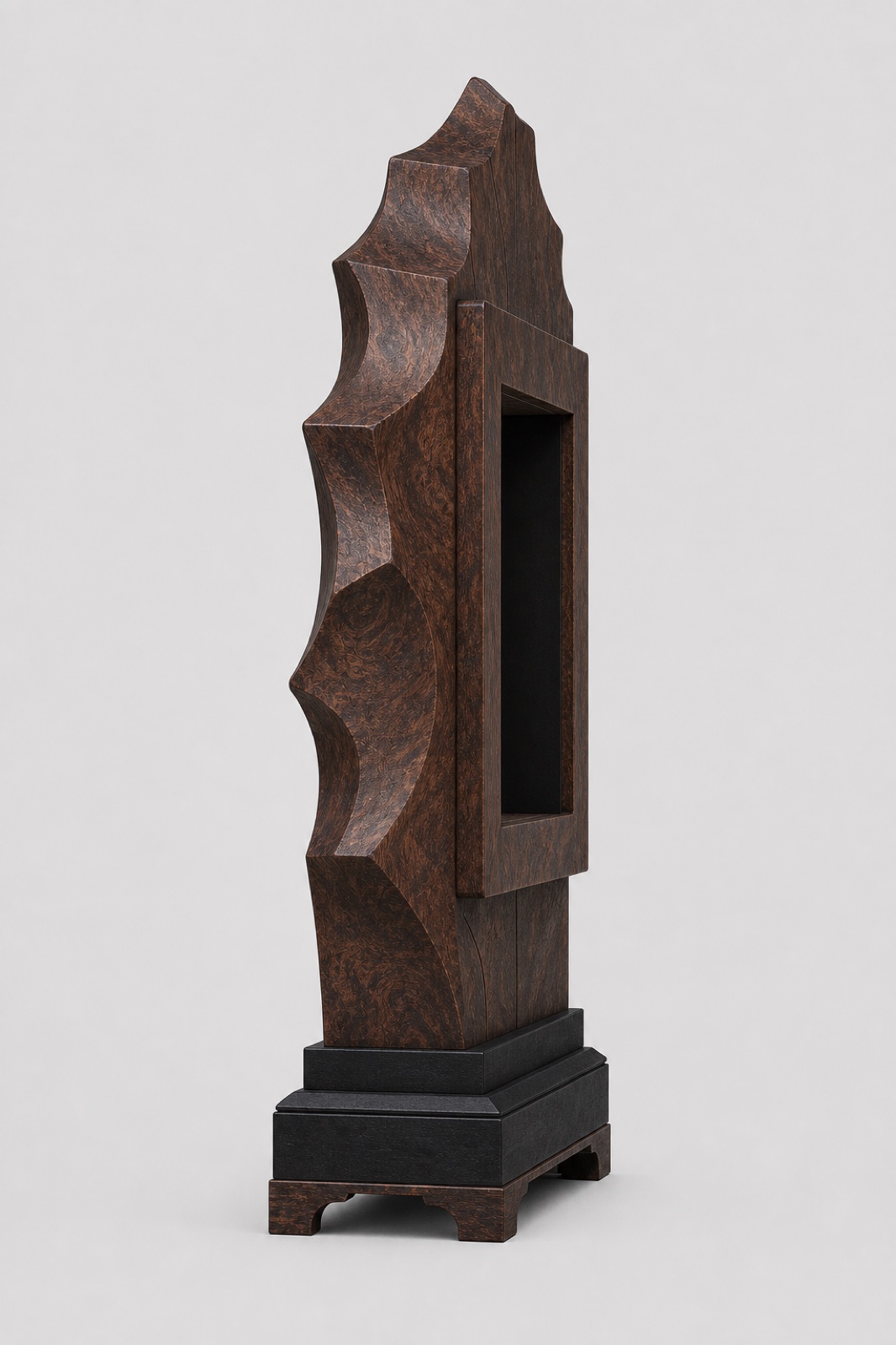
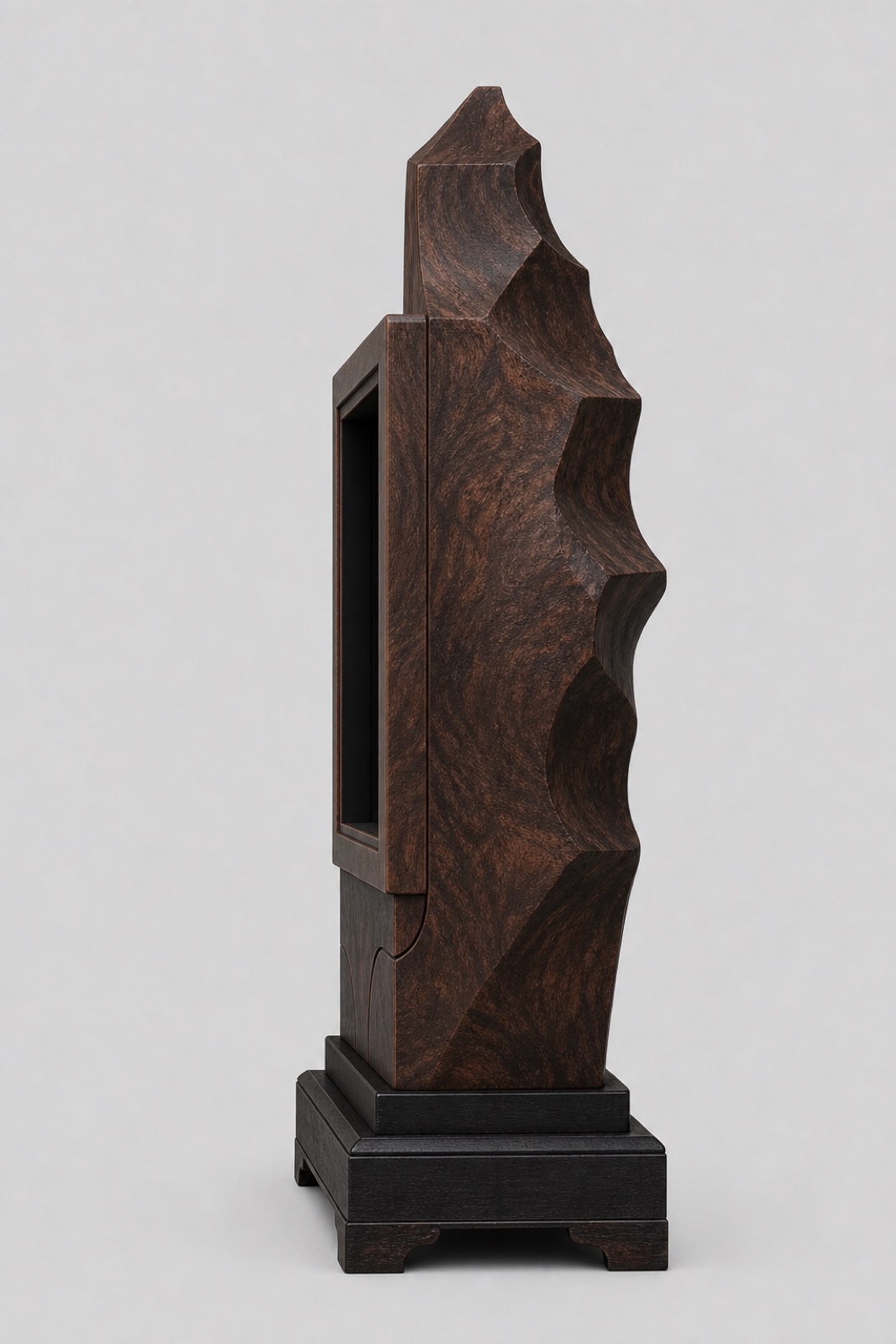
Kindred Spirits presences are housed in several physical forms: a wall-hung frame, a carved monolith with the figure floating inside, a walnut timepiece, a tabletop object. Wooden enclosures are light enough to travel for a seasonal installation. Stone is fabricated for a permanent site.
Square stone
4 ft 7 in W x 1 ft 11 in D x 4 ft 6 in H
Walnut timepiece
4 ft 10 in W x 3 ft 7 in D x 7 ft 2 in H
Vertical stone
2 ft 10 in W x 1 ft 2 in D x 4 ft 8 in H
Tabletop walnut
2 ft 10 in W x 2 ft 1 in D x 4 ft 2 in H
PastPresence develops the physical form of each installation with the institution to suit the exhibition space.